CBT therapy for anxiety offers a powerful approach to understanding and managing anxiety disorders through cognitive restructuring and behavioral techniques. This therapeutic method, rooted in psychological principles, has evolved over decades into a go-to treatment for various anxiety-related issues, including generalized anxiety disorder, panic disorder, and social anxiety. With its focus on modifying negative thought patterns and behaviors, CBT not only helps individuals confront their fears but also provides them with practical tools to navigate daily challenges, making it a vital resource in mental health care.
As we explore the nuances of CBT therapy for anxiety, we will delve into the different types of anxiety disorders it addresses, the key techniques used, and the importance of personalizing the approach to meet individual needs. From understanding the role of homework in reinforcing learning to discussing the benefits and limitations of CBT, this overview aims to shed light on how this therapy empowers individuals to reclaim their lives from anxiety.
Introduction to CBT Therapy
Cognitive Behavioral Therapy (CBT) is a prominent evidence-based psychological treatment that focuses on the interconnections between thoughts, feelings, and behaviors. It operates on the premise that our thoughts influence our emotions and behaviors, and by changing negative thought patterns, we can improve our emotional responses and actions. This approach is particularly effective for anxiety disorders, where dysfunctional thinking often contributes to heightened feelings of fear and distress.
CBT’s structured nature and active participation from clients make it a practical choice for addressing anxiety challenges.
The development of CBT can be traced back to the 1960s, pioneered by psychologists like Aaron Beck and Albert Ellis. Initially stemming from behavioral and cognitive theories, CBT evolved over the years to incorporate various techniques, including exposure therapy, cognitive restructuring, and mindfulness strategies. It has gained widespread acceptance as a reliable method for treating anxiety, with numerous studies supporting its effectiveness.
For instance, meta-analyses indicate that CBT significantly reduces anxiety symptoms in various populations, making it a first-line treatment option for anxiety disorders.
Core Principles of CBT
Understanding the core principles of CBT is essential for grasping its effectiveness in treating anxiety disorders. The therapy is grounded in the following key concepts:
- Cognitive Restructuring: This involves identifying and challenging negative thought patterns, enabling clients to replace them with more balanced and constructive thoughts.
- Behavioral Activation: This principle focuses on encouraging clients to engage in activities that align with their values and interests, thereby reducing avoidance behaviors commonly associated with anxiety.
- Exposure Therapy: Gradual exposure to feared situations or stimuli helps clients confront their anxieties in a controlled manner, reducing avoidance and desensitizing the fear response.
- Self-Monitoring: Clients are taught to track their thoughts, feelings, and behaviors, facilitating greater awareness and insight into their anxiety triggers.
The effectiveness of these principles lies in their ability to help clients develop coping strategies and resilience, allowing them to manage their anxiety in real-world situations. Through guided practice, individuals learn how to apply these skills autonomously, leading to long-term improvements in their mental health.
Psychological Mechanisms Behind CBT’s Effectiveness
The effectiveness of CBT is rooted in several psychological mechanisms that underpin its therapeutic processes. These mechanisms help explain why CBT can lead to significant improvements in anxiety symptoms:
- Thought-Emotion Connection: CBT emphasizes the link between thoughts and emotions, helping clients recognize how distorted thinking can lead to increased anxiety. By altering these thought patterns, clients often experience a corresponding decrease in anxious feelings.
- Increased Coping Skills: Clients develop practical skills and strategies to cope with anxiety, empowering them to face challenges head-on. This leads to enhanced self-efficacy and confidence in their ability to manage stressors.
- Neuroplasticity: Engaging in new cognitive and behavioral patterns can alter brain connections, a process known as neuroplasticity. This means that through consistent practice in CBT, clients can create new, healthier pathways in their brains, reducing anxiety responses over time.
- Desensitization: Regular exposure to anxiety-provoking situations, as practiced in CBT, helps diminish the emotional response over time. Clients learn that their fears are often unfounded, leading to reduced anxiety levels.
These mechanisms highlight how CBT operates not only on a behavioral level but also affects cognitive processes and emotional regulation, ultimately leading to lasting change in individuals struggling with anxiety disorders.
Types of Anxiety Disorders Treated with CBT: CBT Therapy For Anxiety
Cognitive Behavioral Therapy (CBT) is a highly effective treatment method for a range of anxiety disorders. By addressing the thoughts and behaviors that contribute to anxiety, CBT helps individuals develop healthier coping mechanisms. The following sections delve into several common anxiety disorders that can benefit from CBT, illustrating how the therapy is tailored to each specific condition.
Generalized Anxiety Disorder (GAD)
Generalized Anxiety Disorder is characterized by persistent and excessive worry about various life aspects, such as work, health, and social interactions. CBT for GAD focuses on helping patients identify and challenge their anxious thoughts, promoting more realistic and balanced perspectives. A common technique used in CBT for GAD is cognitive restructuring, where individuals learn to replace negative thoughts with more constructive ones.For example, a case study involving a 30-year-old woman with GAD demonstrated significant improvement after undergoing CBT.
She learned to recognize her tendency to catastrophize mundane situations. With the support of her therapist, she practiced reframing these thoughts, resulting in reduced anxiety levels and improved daily functioning.
Panic Disorder
Panic disorder involves recurrent and unexpected panic attacks, leading to intense fear and avoidance behaviors. CBT for panic disorder often includes exposure therapy, where patients gradually face situations that trigger their panic attacks in a controlled environment. This helps desensitize them to the fear response associated with these situations.A notable case study involved a 25-year-old man who experienced debilitating panic attacks in crowded places.
Through CBT, he was gradually exposed to these environments while practicing relaxation techniques. Over time, he developed the confidence to navigate crowded areas without panic, illustrating the effectiveness of CBT in treating panic disorder.
Social Anxiety Disorder
Social Anxiety Disorder is marked by an overwhelming fear of social situations, often leading to avoidance. CBT for social anxiety focuses on addressing the distorted beliefs about social interactions and promoting social skills. Techniques such as role-playing and exposure to social settings are commonly employed.An example of successful CBT treatment for social anxiety involved a 22-year-old college student who feared speaking in class.
After engaging in CBT, she practiced speaking in front of small groups and received feedback from her therapist. Over the course of treatment, she gained confidence and was able to participate actively in class discussions, showcasing the positive outcomes of CBT for social anxiety.
Specific Phobias
Specific phobias entail intense fear of particular objects or situations, such as heights or spiders. CBT addresses these fears through gradual exposure and cognitive restructuring strategies. Individuals learn to challenge their irrational beliefs about the feared object and replace them with more realistic thoughts.A case study of a 40-year-old woman with a phobia of flying exemplified the effectiveness of CBT.
Through a structured exposure plan that began with watching videos of planes, she gradually progressed to visiting an airport and eventually took a flight. Her successful journey illustrates the transformative potential of CBT for overcoming specific phobias.
Key Techniques Used in CBT for Anxiety
Source: therapy-central.com
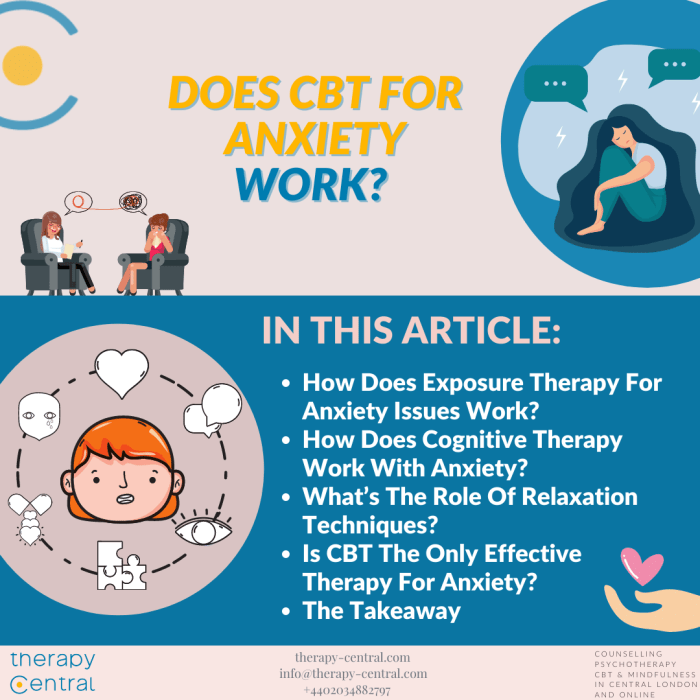
Cognitive Behavioral Therapy (CBT) offers a structured approach to managing anxiety by employing various techniques that target thought patterns and behaviors. These methods help individuals shift their perspectives and develop coping strategies to reduce anxiety symptoms effectively. Understanding these techniques is vital for anyone looking to gain better control over their anxiety.CBT utilizes a range of techniques, among which cognitive restructuring and exposure therapy are the most common.
Cognitive restructuring involves identifying and challenging negative thought patterns that contribute to anxiety. Conversely, exposure therapy is a technique aimed at gradually confronting fears in a controlled manner, helping clients reduce their sensitivity to anxiety-provoking stimuli.
Cognitive Restructuring
Cognitive restructuring is a fundamental technique in CBT that focuses on changing negative thought patterns. This process involves recognizing irrational or distorted thoughts and replacing them with more balanced and realistic perspectives. By altering these cognitive distortions, clients can reduce their anxiety levels significantly.
Exposure Therapy
Exposure therapy is another core technique in CBT, designed to help individuals face their fears in a safe environment. This gradual exposure helps reduce the power that anxiety triggers hold over a person. The process involves systematic desensitization, where clients are exposed to the feared object or situation incrementally.
Table of CBT Techniques
The following table Artikels common CBT techniques used in anxiety treatment, along with their definitions and applications:
| Technique | Definition | Application |
|---|---|---|
| Cognitive Restructuring | Identifying and challenging negative thoughts to replace them with balanced beliefs. | Helps clients recognize distorted thinking patterns contributing to anxiety. |
| Exposure Therapy | A method that gradually exposes individuals to feared situations or stimuli. | Reduces avoidance behavior and desensitizes clients to anxiety triggers. |
| Behavioral Activation | Encouraging engagement in positive activities to counteract anxiety. | Enhances mood and reduces feelings of helplessness associated with anxiety. |
| Mindfulness Techniques | Practices that promote present-moment awareness and acceptance. | Reduces rumination and helps manage anxiety symptoms effectively. |
Practical Exercises for Clients
Engaging in practical exercises between therapy sessions can significantly enhance the effectiveness of CBT techniques. The following bullet-point list provides exercises that clients can practice:
Thought Journaling
Document anxious thoughts and identify cognitive distortions.
Gradual Exposure
Create a hierarchy of feared situations and start facing them step by step.
Breathing Exercises
Practice deep breathing techniques to reduce immediate anxiety symptoms.
Mindfulness Meditation
Spend a few minutes each day focusing on the present moment to enhance awareness and reduce anxiety.
Positive Affirmations
Write and recite affirmations to challenge negative self-talk and boost self-esteem.These techniques and exercises are essential components in the toolkit of anyone undergoing CBT for anxiety, fostering a proactive approach to managing symptoms and improving overall mental health.
The Role of Homework in CBT
Homework assignments play a critical role in Cognitive Behavioral Therapy (CBT), particularly for individuals dealing with anxiety. These tasks provide a bridge between therapy sessions, allowing clients to practice the skills and techniques they learn in a real-world context. When clients engage in homework, it reinforces the concepts discussed during therapy and fosters a greater understanding of how to manage their anxiety effectively.
The consistency of practicing these skills outside of sessions is essential for making lasting changes.Homework assignments in CBT serve multiple purposes: they help clients confront their fears, test their beliefs, and develop coping strategies. By actively engaging with the material, clients can recognize patterns in their thoughts and behaviors, leading to greater self-awareness and insight. This practice not only enhances their skills but also builds confidence, as they see tangible progress in managing their anxiety.
Types of Homework Tasks in CBT for Anxiety
Various types of homework tasks are commonly assigned in CBT to support treatment progress. Each type is tailored to address specific aspects of anxiety and facilitate skill-building. Below are some notable categories of homework tasks:
- Behavioral Experiments: Clients may be asked to conduct experiments that test the validity of anxious thoughts. For instance, someone fearing social situations might attend a social gathering to observe the outcomes and challenge their beliefs about being judged.
- Thought Records: This involves keeping a log of anxious thoughts, feelings, and associated triggers. By documenting these experiences, clients can learn to identify cognitive distortions and replace them with more balanced thoughts.
- Exposure Tasks: Gradual exposure to feared situations is essential. Clients might be tasked with facing specific anxieties, such as going to a crowded place for a short duration, to diminish their fear response over time.
- Mindfulness Practices: Clients may be encouraged to engage in mindfulness exercises, such as meditation or deep-breathing techniques, and report on their experiences and feelings related to anxiety reduction.
- Journaling: Reflective journaling allows clients to explore their feelings and thoughts regarding their anxiety and progress. This can enhance self-reflection and reinforce learning from therapy sessions.
Each of these tasks addresses the underlying mechanisms of anxiety and promotes active engagement in the therapeutic process. By taking these steps, clients not only reinforce the techniques learned in therapy but also gain valuable insights into their responses to anxiety-provoking situations.
“Homework in CBT empowers clients to take charge of their anxiety, fostering independence and resilience.”
Effective homework activities can significantly enhance treatment progress. For example, a client struggling with panic attacks might be assigned to practice breathing techniques during moments of heightened anxiety. Another client with social anxiety could be tasked with initiating a conversation with a stranger and noting the outcome. These practical assignments complement the therapeutic work done in sessions and help clients build coping mechanisms that are critical for their recovery journey.
Benefits and Limitations of CBT for Anxiety
Source: choosingtherapy.com
Cognitive Behavioral Therapy (CBT) has become a cornerstone in the treatment of anxiety disorders, widely recognized for its structured approach and effectiveness. CBT focuses on altering negative thought patterns and behaviors that contribute to anxiety, making it a compelling option for many individuals struggling with these issues. However, like any therapeutic approach, it comes with both benefits and limitations that are essential to understand.
Benefits of CBT for Anxiety, CBT therapy for anxiety
CBT offers a range of benefits that make it a preferred choice for treating anxiety disorders. The following points highlight its strengths:
- Evidence-Based Effectiveness: Numerous studies have shown that CBT is effective in reducing symptoms of anxiety and depression, often achieving results comparable to medication.
- Skill Development: CBT equips individuals with practical skills to manage their anxiety long-term, including coping strategies and problem-solving techniques.
- Short-Term Treatment: Typically, CBT requires fewer sessions than other therapeutic methods, often yielding results in a matter of weeks, making it a cost-effective option.
- Personal Empowerment: CBT encourages individuals to take an active role in their healing process, fostering a sense of control over their symptoms and enhancing self-efficacy.
- Flexibility: CBT can be adapted to various formats, including individual therapy, group sessions, and online platforms, making it accessible to a wide audience.
Limitations of CBT for Anxiety
While CBT has many advantages, there are certain limitations that can affect its efficacy for some individuals. Understanding these challenges can help set realistic expectations for treatment:
- Not Suitable for Everyone: Some individuals may find it difficult to engage with the cognitive aspects of therapy. Those with severe mental health issues might require a more comprehensive treatment approach.
- Requires Commitment: CBT necessitates active participation and homework outside of sessions. This can be challenging for those who struggle with motivation or time constraints.
- Focus on Thoughts: The emphasis on cognitive restructuring may overlook deeper emotional issues or trauma that could be contributing to anxiety, limiting its effectiveness in such cases.
- Variable Results: While many individuals experience significant improvements, CBT does not guarantee results for everyone, and some might require additional therapies or medications.
- Potential for Over-Simplification: Critics argue that CBT may simplify complex emotional issues, neglecting the nuance of individual experiences that contribute to anxiety disorders.
Comparison with Other Therapeutic Approaches
When comparing CBT to other therapeutic methods for anxiety, it’s important to consider the unique strengths and weaknesses of each approach. The following points illustrate how CBT stands in contrast to alternatives like psychodynamic therapy and medication:
| Therapeutic Approach | Strengths | Weaknesses |
|---|---|---|
| CBT | Structured, focuses on present issues, time-limited | May overlook deeper emotional issues, requires active participation |
| Psychodynamic Therapy | Explores underlying emotional conflicts and relationships | Longer duration, may not provide immediate symptom relief |
| Medication | Can provide rapid symptom relief, especially in severe cases | Potential for side effects, does not address underlying thought patterns |
Integrating CBT with Other Treatments
Integrating Cognitive Behavioral Therapy (CBT) with other treatment modalities can create a more comprehensive approach to managing anxiety disorders. This combination can enhance the overall effectiveness of treatment by addressing the multifaceted nature of anxiety. By utilizing both psychological and pharmacological strategies, patients can experience better outcomes and improved quality of life.Combining CBT with medication can be particularly beneficial for individuals with moderate to severe anxiety.
Medication may help alleviate symptoms enough to allow clients to engage more fully in therapy. For instance, selective serotonin reuptake inhibitors (SSRIs) can reduce anxiety levels, enabling patients to apply CBT techniques more effectively. This integrative approach offers a dual mechanism that addresses both the biological and psychological aspects of anxiety disorders.
Integrating Mindfulness Practices with CBT Techniques
Mindfulness practices can complement CBT by fostering greater awareness and acceptance of present-moment experiences. By incorporating mindfulness into the CBT framework, individuals can learn to observe their thoughts and feelings without judgment, which can be particularly useful in managing anxiety.This integration can include the following strategies:
Mindful Breathing
Focusing on breath can help ground individuals during moments of anxiety. This technique can be integrated into CBT sessions to help patients center themselves before discussing anxiety-provoking thoughts.
Body Scan Meditation
This practice encourages awareness of bodily sensations, which can help individuals recognize the physical manifestations of anxiety and develop strategies to cope with them.
Thought Defusion Techniques
Mindfulness can help separate individuals from their thoughts, making it easier for them to challenge and reframe negative thinking patterns characteristic of CBT.By weaving these mindfulness techniques into CBT sessions, therapists can enhance their clients’ ability to manage anxiety and cultivate a more resilient mindset.
Complementary Therapies to Enhance CBT Outcomes for Anxiety
Several complementary therapies can further enhance the effectiveness of CBT for anxiety. These therapies can provide additional support and coping strategies, enriching the treatment experience. Here are some options to consider:
- Yoga: Incorporates physical movement and mindfulness, promoting relaxation and a sense of well-being.
- Aromatherapy: Utilizes essential oils to create a calming environment that supports emotional regulation.
- Art Therapy: Encourages self-expression through creative processes, helping individuals explore and process their emotions.
- Exercise: Regular physical activity can reduce anxiety symptoms by releasing endorphins and improving overall mood.
- Support Groups: Provide a structured environment for individuals to share experiences and coping strategies, enhancing social support.
- Nutrition Counseling: Focuses on diet and nutrition, which can play a crucial role in mental health and emotional stability.
These complementary therapies can work synergistically with CBT, providing individuals with a holistic approach to managing anxiety and fostering overall well-being.
Personalizing CBT for Diverse Needs
The effectiveness of Cognitive Behavioral Therapy (CBT) can significantly increase when tailored to meet the unique needs of various demographic groups. Recognizing the differences in age, developmental stages, and cultural backgrounds can enhance the therapeutic process and help clients feel understood and supported. This section will explore how CBT can be personalized for children, adolescents, seniors, and those with co-occurring disorders, while also considering cultural factors that influence anxiety treatment.
Tailoring CBT for Different Demographic Groups
Children, adolescents, and seniors each have distinct cognitive and emotional needs that must be considered when implementing CBT. Tailoring techniques to suit each group enhances engagement and therapeutic outcomes. For children, the use of play therapy and creative expression, such as drawing or storytelling, can be integrated into CBT sessions. Simplifying language and using age-appropriate examples help convey concepts effectively.
For example, a child may relate to a story about a character facing a fear that mirrors their own experiences.Adolescents often face unique pressures, including social anxiety and identity issues. Incorporating peer involvement and technology, such as apps for tracking thoughts and feelings, can resonate well with younger clients. Role-playing scenarios that reflect real-life challenges can also empower adolescents to practice coping strategies.Seniors may experience anxiety related to health concerns and life transitions.
Modifying CBT for older adults involves using relatable examples and a slower pace in sessions to ensure comprehension. Incorporating mindfulness and relaxation techniques can also be beneficial, as they align with many seniors’ preferences for holistic approaches.
Modifying CBT Techniques for Clients with Co-occurring Disorders
Many individuals seeking treatment for anxiety may also struggle with other mental health issues, such as depression or substance use disorders. Modifying CBT techniques for these clients requires an integrated approach that addresses multiple issues simultaneously.Identifying the primary concern is crucial, as it guides the therapeutic focus. For instance, if anxiety is the predominant issue, CBT techniques can be emphasized, while also addressing underlying depression through cognitive restructuring.
Skill-building exercises that enhance emotional regulation and coping strategies can be particularly effective. Creating a supportive environment where clients feel safe discussing their co-occurring disorders is essential. Regularly monitoring progress and adapting strategies based on the client’s evolving needs ensures a client-centered approach.
Cultural Considerations in Applying CBT for Anxiety
Cultural background plays a significant role in how individuals perceive and cope with anxiety. To effectively apply CBT, therapists must demonstrate cultural competence and sensitivity to the diverse values and beliefs of their clients.Understanding cultural variations in expressing anxiety is crucial. Some individuals may describe anxiety in somatic terms, while others may articulate emotional experiences. Therapists should be open to exploring these expressions without imposing their interpretations.Incorporating culturally relevant examples into CBT can enhance relatability.
For instance, discussing anxiety triggers specific to a client’s cultural context can help legitimize their experiences and foster trust in the therapeutic relationship. Additionally, therapists should consider language barriers and provide resources in the client’s native language wherever possible, ensuring that the therapeutic materials are accessible.Acknowledging and respecting cultural practices, such as traditional healing methods, can also be vital. Integrating these practices with CBT may enhance the effectiveness of treatment, demonstrating an understanding of the client’s whole self within their cultural framework.
Measuring Progress in CBT for Anxiety
Tracking progress in Cognitive Behavioral Therapy (CBT) for anxiety is essential for understanding the effectiveness of the treatment and for making necessary adjustments. By measuring progress, therapists can identify which techniques are working, which may need refinement, and how clients are responding to various interventions. This ongoing assessment helps both clients and therapists stay aligned with treatment goals and enhances the overall therapeutic relationship.
Assessing client progress can be achieved through a variety of tools and methods, both self-reported and clinician-administered. These assessments provide valuable insights into the client’s emotional state, symptoms, and overall functioning. Regular feedback sessions are crucial in this process, as they allow for collaborative discussions about progress, setbacks, and adjustments to the treatment plan. Below, we explore various assessments and tools used to measure client progress in CBT, as well as the importance of feedback in therapy.
Assessments and Tools for Measuring Progress
A number of standardized assessments can be utilized to gauge the effectiveness of CBT for anxiety. These assessments can be broadly categorized into self-reported measures completed by the client and clinician-administered assessments conducted by a therapist. Below is a comparative table highlighting some of the key differences between the two types of assessments:
| Assessment Type | Example Tools | Strengths | Limitations |
|---|---|---|---|
| Self-Reported Measures | Generalized Anxiety Disorder 7-item (GAD-7), Beck Anxiety Inventory (BAI) | Client’s perspective, easy to administer, can track changes over time | Possible response bias, relies on clients’ insights and honesty |
| Clinician-Administered Assessments | Structured Clinical Interview for DSM-5 (SCID), Hamilton Anxiety Rating Scale (HAM-A) | Professional evaluation, detailed insights, reduces bias | Time-consuming, may not reflect client’s subjective experiences |
In addition to these assessments, regular feedback sessions play a pivotal role in the therapeutic process. These sessions serve multiple purposes:
- They provide an opportunity for clients to express their feelings about their progress and the therapy process.
- They allow therapists to address any concerns or difficulties that clients may be experiencing.
- They facilitate collaborative decision-making regarding modifications to treatment plans.
- They reinforce the therapeutic alliance, helping clients feel supported and understood.
“Feedback is the breakfast of champions.” – Ken Blanchard
Ultimately, measuring progress in CBT for anxiety not only enhances the effectiveness of therapy but also empowers clients by making them active participants in their healing journey. Through the combined use of assessments and feedback sessions, both therapists and clients can ensure that the approach remains responsive to the client’s evolving needs and challenges.
Concluding Remarks
Source: choosingtherapy.com
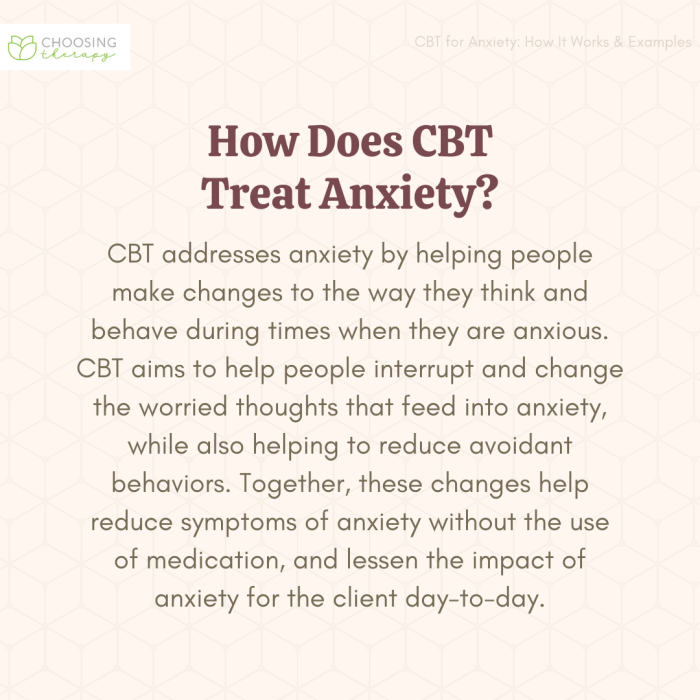
In summary, CBT therapy for anxiety stands out as an effective and structured approach to treating a range of anxiety disorders. By equipping individuals with cognitive and behavioral strategies, it fosters resilience and a sense of control over their anxiety. As we have seen, the integration of personalized techniques and the importance of continuous progress measurement play crucial roles in maximizing the benefits of CBT.
Whether through individual or combined treatment plans, the journey towards managing anxiety with CBT is a promising path toward improved mental well-being.
Detailed FAQs
What is the duration of CBT therapy for anxiety?
CBT therapy typically lasts between 12 to 20 sessions, depending on individual needs and progress.
Can CBT therapy be done online?
Yes, CBT therapy can be effectively conducted online through teletherapy platforms, making it accessible for many.
Are there any side effects of CBT therapy?
CBT is generally safe, but some individuals may experience initial discomfort when confronting anxiety-provoking thoughts or situations.
How does CBT differ from medication for anxiety?
CBT focuses on changing thought patterns and behaviors, while medication aims to manage symptoms chemically; both can be used together for optimal results.
Is CBT suitable for children?
Yes, CBT can be adapted for children and adolescents, often incorporating play and creative techniques to engage younger clients.